
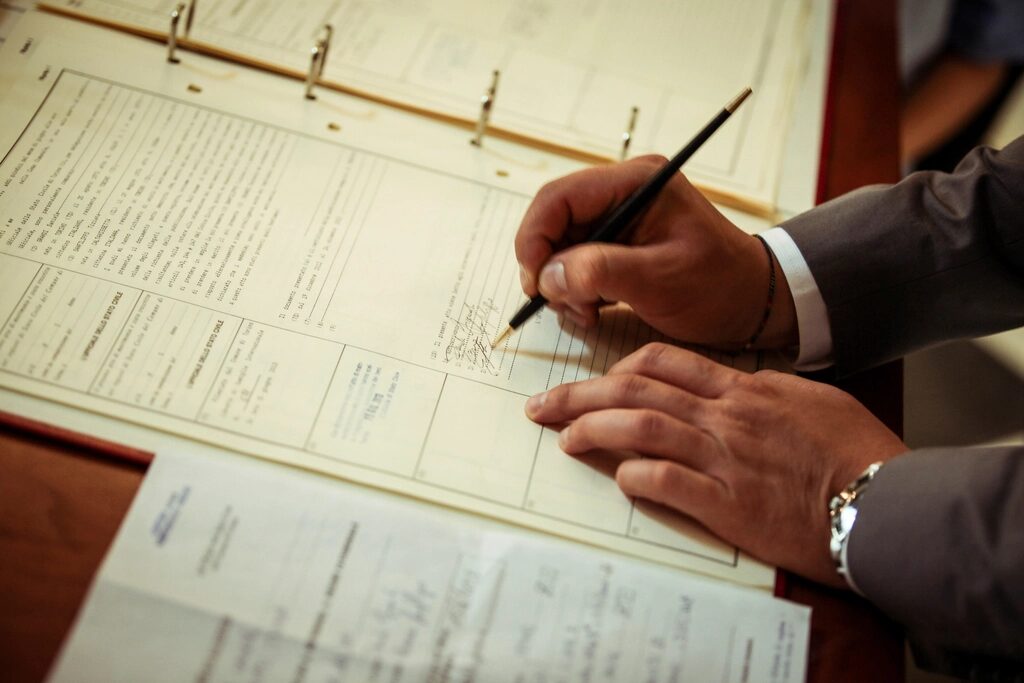
Selling a house in the Maresme involves nine steps: valuing it, gathering the paperwork, setting the asking price, preparing it, marketing it, negotiating, signing the deposit contract, completing at the notary and settling the taxes. When everything is well coordinated, the whole journey usually takes between one and four months from the moment you decide to sell until the signing, according to the Fotocasa selling guide.
The difference between a smooth sale and one that drags on is rarely a single step. It is the order. An asking price that is set badly in week one is paid for in month six. An expired habitability certificate that nobody checked can delay the notary just when the buyer already has their mortgage approved.
That is why we have laid out the process of selling a home step by step, exactly as we work through it with the owners who trust us with their house. If you are thinking of selling a house in the Maresme, here is the complete map, with approximate timescales, documents and the decisions worth making at each stage.
Summary: the 9 steps to sell a house in the Maresme and how long each one usually takes
Before going into detail, this table gives you the overall picture. Timescales are approximate and depend on the property, the town and demand at any given moment.
| Step | What happens | Approximate timescale |
|---|---|---|
| 1. Decision and valuation | Goals, timing and a reasoned market value | 1 week |
| 2. Paperwork | Land Registry extract, habitability certificate, energy certificate, IBI, community of owners | 1 to 3 weeks (in parallel) |
| 3. Asking price | Pricing strategy and negotiating margin | Alongside the valuation |
| 4. Preparation and photos | Small repairs, home staging, photo shoot | 1 to 2 weeks |
| 5. Marketing and viewings | Promotion, buyer screening, viewings | Varies with demand |
| 6. Offer and negotiation | Written offers, conditions, financing | Days or weeks |
| 7. Deposit contract | Signed reservation with amount and completion date | 1 to 2 weeks after agreement |
| 8. Signing at the notary | Deed, payment and handover of keys | As agreed in the deposit contract |
| 9. Taxes | Municipal capital gains tax and income tax | 30 working days and the following tax return |
Step 1: decide with good information and value the property
It all starts with an honest conversation about your goals. Selling to buy another home is not the same as needing cash within a set period or managing an inheritance shared between several siblings. The goal shapes the strategy: the price, the pace and even the type of buyer worth reaching.
Once that is clear, it is time to find out what your home is really worth. A serious valuation is based on comparable sales in your area, on current demand and on what makes your house unique: views, orientation, condition, garden or proximity to the sea. Prices on the portals are asking prices, not sale prices, and are only useful as a starting reference. If you want to see how they vary from town to town, take a look at our guide to real prices by town in the Maresme.
A note on terminology: an agency valuation is not an official appraisal. Appraisals (tasaciones) are signed by approved valuation firms and are usually requested by the buyer’s bank. What we give you is a market analysis to help you decide well.
Where do we start with your home?
The first step is to know its real value. We will prepare a reasoned valuation based on sales in your town, with no obligation and in complete confidence.
Step 2: gather the paperwork before listing
Having the papers ready from the start avoids half the surprises. In Catalonia, the notary will ask at the very least for your ID (DNI or NIE), the title deed, a valid habitability certificate (cédula de habitabilidad), the energy performance certificate, a certificate from the community of owners showing no outstanding debts and the latest IBI property tax receipt, as summarised in this notarial guide to the documents needed to sell in Catalonia.
- Habitability certificate. The Catalan Right to Housing Act 18/2007 (art. 132) requires it to be handed to the buyer. For second occupancy it expires after 15 years, so it is worth checking at the outset.
- Energy performance certificate. Mandatory for a sale under Royal Decree 390/2021, and the rating must already appear in the listing.
- Community of owners certificate. It proves you are up to date with service charges and special levies.
- Land Registry extract and IBI receipt. The extract (nota simple) confirms ownership and any charges on the property, and the IBI receipt gives the cadastral reference.
- Mortgage balance certificate, if you still have a mortgage.
If the property is the family home and you are married or in a stable partnership, remember that in Catalonia your spouse or partner’s consent is required to sell it, even if it is only in your name (art. 231-9 of the Catalan Civil Code). Better to know it today than on the day of signing.
Step 3: set the asking price strategically
The asking price is the decision that most affects the outcome. A price in line with the market attracts viewings and offers from the first week; an inflated one leaves the property standing still and forces price cuts later, with less leverage to negotiate.
Buyers arrive well informed and they negotiate. In Mataró, for example, idealista users offered on average 15.9% below the asking price in September 2026. That figure is not the final discount at closing, but it does tell you something useful: if you start well above the real value, the conversation will begin a long way from where you want to finish.
Our recommendation is to set an asking price you can defend, with a small margin planned in advance, and a review plan with dates. That way every adjustment, if one comes, is a decision and not a reaction.
Step 4: prepare the property and take the photos
The first viewing of your house happens on a screen. Before listing, it is worth spending one or two weeks tidying, depersonalising, fixing small defects and making the most of the light. In high-value homes, light home staging and a professional shoot with video and floor plan make a real difference to how buyers perceive the property.
There is no need to renovate. What matters is that buyers understand the spaces and can picture themselves living in them.

Step 5: market the property and screen viewings
Listing on the portals is necessary, but it is not enough. A good plan, like the one we follow with the homes we have for sale in the Maresme, combines portals, our own multilingual website, a base of already qualified buyers and, when the owner prefers it, a discreet sale with no public listing, as we explain in our guide to the off-market property scene in the Maresme.
Screening is just as important. Before showing the property, we check that the interested party matches what you are offering, that they have the means to buy and that their timing is compatible with yours. Fewer but better viewings mean less disruption for you and more serious negotiations.
Step 6: receive offers and negotiate
When an interested buyer appears, we ask for the offer in writing: price, method of payment, whether it depends on a mortgage and the planned signing date. A slightly lower offer with approved financing and clear timescales can be worth more than a higher one full of conditions.
Negotiation is not only about price. You also agree on what stays in the property (furniture, appliances), who covers certain costs and the handover schedule. Having everything agreed before the deposit contract avoids tension later on.
Step 7: sign the deposit contract
Once the deal is agreed, the deposit contract (contrato de arras) is signed. It reserves the property and sets the terms of the sale. Most commonly, the buyer pays around 10% of the price at this point, according to the Fotocasa guide.
The type of deposit matters. The most common are penalty deposits (arras penitenciales), governed by article 1454 of the Spanish Civil Code: if the buyer withdraws, they lose what they have paid, and if the seller withdraws, they must return double, as the consumer organisation OCU points out. Check carefully the price, the deadline for completion, any charges on the property and what happens if the buyer does not obtain their mortgage, if this has been agreed.
Step 8: complete at the notary and hand over the keys
On the day of signing, the notary reads the deed, checks the documents and the payment is made. Always ask for verifiable means of payment, such as a banker’s draft made out to you or a transfer confirmed at the notary’s office. If you have a mortgage, part of the price is used to pay it off in the same act.
As for notary fees, article 1455 of the Spanish Civil Code establishes that, unless otherwise agreed, the original deed is paid by the seller and the first copy by the buyer. Then comes the handover of keys, the transfer of utility contracts and notifying the community of owners.

Step 9: settle the taxes after the sale
Selling does not end at the notary. As the seller, there are two taxes that belong to the transaction:
- Municipal capital gains tax (plusvalía municipal, IIVTNU). It taxes the increase in the value of the land. You can choose between the objective and the actual method, and if there was no increase, nothing is payable, following the reform introduced by Royal Decree-Law 26/2021. For sales, the deadline to declare it is 30 working days. You can estimate it in a minute with our municipal capital gains tax calculator.
- Income tax (IRPF) on the capital gain. The difference between what you receive and what the property cost you (plus expenses and improvements) is taxed in the savings base at 19, 21, 23, 27 or 30%, according to the bands published by the Spanish Tax Agency. It is declared in the following year’s tax return.
In some cases the gain is exempt, such as reinvestment in a new main residence or the sale of a main residence by people over 65, according to the exemptions listed by the Tax Agency. If the seller is not tax resident in Spain, the buyer withholds 3% of the price, as La Vanguardia explains. In any case, we recommend reviewing your specific situation with a tax adviser before setting the price.
How long the selling process really takes
The most variable stretch is marketing. According to the latest idealista study on time to sell, in the second quarter of 2026, 7% of the homes sold were listed for less than a week, 19% for between one week and a month, 27% for between one and three months, 36% for between three months and a year and 11% for more than a year.
What shortens that time the most depends on you and on whoever supports you: a realistic price, paperwork in order and a presentation that makes the property stand out from day one. If you want to know what to ask an agency before instructing it, we explain it in how to choose an estate agent to sell your house.
How we support every step at Maresme Realtors
We are a boutique real estate agency and we work with only a few homes at a time. That allows us to be there at every stage with the same team:
- The same people from start to finish. María Eugenia Echezarreta, with more than 25 years in sales and customer service, and Adrián García, an estate agent specialising in investment and property management, value, present, show and negotiate your home.
- Paperwork reviewed before listing, so the notary brings no surprises.
- A price you can defend, with real comparables and an agreed review plan.
- Local and international buyers, with service in Spanish, Catalan and English.
- Regular reports on interested parties, viewings and buyer feedback.
- Accredited agents, registered with the Catalan Register of Real Estate Agents under number AICAT 13243, and members of API (Agentes de la Propiedad Inmobiliaria) under no. 14286.
- Rated 5.0 on Google from 13 reviews, which you can read on our Google profile.
Shall we take the first step together?
Tell us about your home and your timing, by phone, on WhatsApp or at our office at Av. Cabrera 36, Mataró (by appointment). We will prepare a reasoned valuation and a sales plan tailored to you, with no obligation.
Frequently asked questions about the home selling process
These are the questions owners ask us most often when they start preparing a sale.
Value the property, gather the paperwork, set the asking price, prepare and photograph it, market it and screen viewings, negotiate the offer, sign the deposit contract, complete at the notary and settle the municipal capital gains tax and income tax.
It depends above all on the price and on demand in the area. As a reference, Fotocasa puts the whole process at between one and four months, and between the deposit contract and the deed there are usually as many weeks as agreed in the contract.
ID, title deed, valid habitability certificate, energy performance certificate, certificate of no debts with the community of owners, latest IBI receipt and, if there is a mortgage, the outstanding balance certificate.
It is not compulsory, but it is highly recommended. It reserves the property, sets the price and completion date and establishes what happens if either party pulls out.
Municipal capital gains tax, if the value of the land increased, and income tax on the capital gain, which is taxed in the savings base. The year’s IBI is usually apportioned with the buyer.

Acompaña a propietarios e inversores en el Maresme con una mirada estratégica y profundamente humana. Con más de 20 años de experiencia profesional, especialmente en entornos B2B y distintas industrias, aporta visión, estructura y claridad a cada decisión inmobiliaria. Su forma de trabajar combina análisis de mercado, procesos bien cuidados y una comunicación honesta y cercana, porque entiende que detrás de cada propiedad hay personas, momentos vitales y proyectos importantes. Su criterio profesional y su sensibilidad la convierten en una aliada de confianza para quienes buscan invertir o vender con seguridad y tranquilidad.